
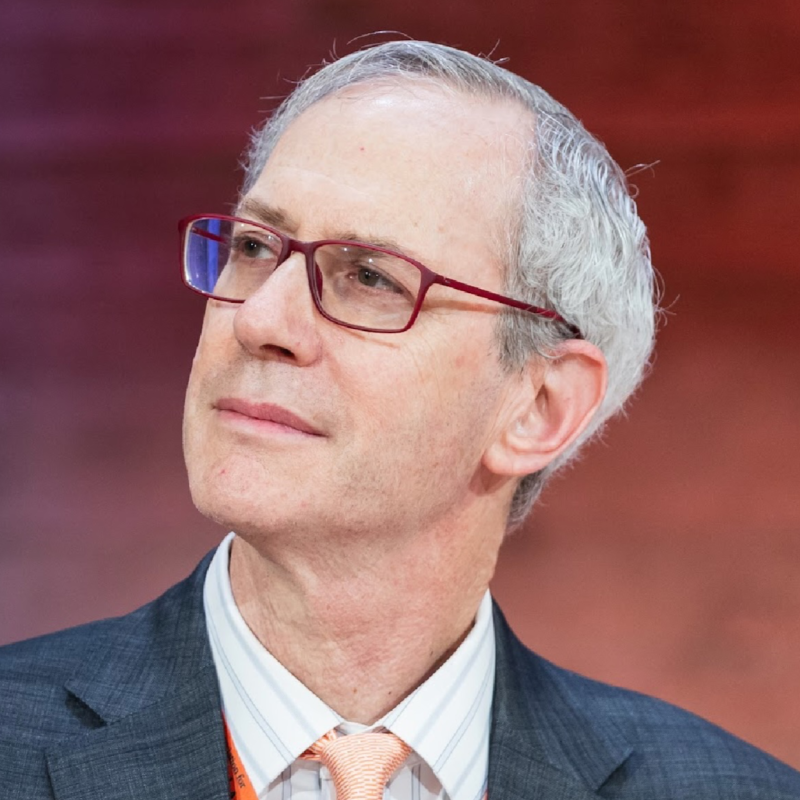
Mark Nitzberg
Strategic Advisor
University of California, Berkeley
Adviser to the CalCompute coalition — brings two decades of AI governance work, and the institution-building experience behind it, to the question of how a public compute platform should be run
Mark Nitzberg is executive director of the Center for Human-Compatible AI at UC Berkeley, head of strategic outreach for Berkeley AI Research and director of technology research at the Berkeley Roundtable on the International Economy. He advises the CalCompute coalition. He has spent the past decade on a question that sits underneath CalCompute’s: once AI systems become infrastructure the public depends on, what do the institutions running them owe the people they serve?
The Center for Human-Compatible AI is the Berkeley research center built around Stuart Russell’s argument that AI systems should be designed to defer to human objectives rather than optimize fixed ones handed to them. It sits within Berkeley AI Research, and Nitzberg runs it — the operating side of a research agenda spanning value alignment, oversight of autonomous systems and the long-run relationship between AI capability and human control. His BRIE appointment puts the same questions in an economic frame, where the roundtable studies how technology reshapes work, competition and the position of states in the international economy.
In 2024 he helped found the International Association for Safe and Ethical AI, a nonprofit headquartered in Paris that convenes researchers, industry, government and civil society around AI safety and ethics, and he serves as its interim executive director. Russell is its president; Yoshua Bengio sits on its steering committee. The association’s inaugural conference drew leading AI researchers to the OECD headquarters in Paris on Feb. 6–7, 2025, with tracks on global coordination, safety engineering, interpretability and control of deployed systems. Nitzberg was also a contributor to the Singapore Consensus on Global AI Safety Research Priorities, an international effort in 2025 to set a shared research agenda for the field.
He writes for general readers as well as for the journals. With the futurist Olaf Groth he co-authored Solomon’s Code: Humanity in a World of Thinking Machines, an account of how AI systems reshape values, trust and power across different societies, later revised and reissued as The AI Generation. With Russell he published “When code isn’t law: rethinking regulation for artificial intelligence” in Policy and Society, an argument that AI oversight cannot be delegated to technical standards alone, and with the political economist John Zysman he wrote “Governing AI: Understanding the Limits, Possibility, and Risks of AI in an Era of Intelligent Tools and Systems” for BRIE.
Before Berkeley he built the technology he now helps govern. He founded the Blindsight Corporation, which developed computer vision products for blind and low-vision users, and served as its chief executive through its acquisition by Amazon’s A9 subsidiary, where he then directed computer vision products. He was founding chief technology officer of Smartleaf, which automates investment portfolio management, and held earlier roles at Bell Laboratories and Microsoft. His ventures have spanned health care, finance, education and development-aid data analytics.
Nitzberg studied AI at MIT and earned his doctorate in computer vision and human perception at Harvard University in 1991 under the mathematician David Mumford. He holds a bachelor’s degree in mathematics and music composition from the University of Oregon.